June 17, 2010 at 1:30 pm
· Filed under Career Resources, Expert Opinion: Interviews and More, Legal Education, Public Interest Jobs
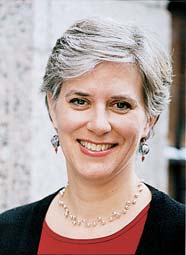 This week’s Expert Opinion, on how to maximize your summer internship experience comes to us courtesy of Deb Ellis, Assistant Dean for Public Service at NYU School of Law, where she directs the Public Interest Law Center (PILC) and the Root-Tilden-Kern Scholarship Program and oversees the Judicial Clerkship Office. Prior to heading PILC, Deb had a varied public interest career, including serving as Legal Director of the NOW Legal Defense and Education Fund, where in 1992 she argued Bray v. Alexandria Women’s Health Clinic before the U.S. Supreme Court. She also served as Legal Director of the ACLU of New Jersey, and as a Staff Attorney at the ACLU Women’s Rights Project, and at the Southern Poverty Law Center. Deb graduated from Yale College and from NYU Law where she was a Root-Tilden-Kern Scholar. She clerked for the late Judge Frank M. Johnson, Jr., of the Eleventh Circuit Court of Appeals, in Montgomery, Alabama.
Exams are over and you’ve begun your public interest internship! How can you be the kind of intern that employers will rave about and hopefully want to hire as an attorney someday?
From my perspective as both a public interest practitioner and now a law school counselor, I have developed eight tips based on what I look for when I hire: individuals who take initiative — who can figure out what needs to be done on their cases and projects. In short, I look for people who are proactive.
Sometimes students find that it takes a change of perspective to be proactive after a year spent in classrooms, where their role is more passive. But in the work world it is essential to take responsibility for your own learning. If you make that effort — to think through your priorities, contribute as much as you can to your employer, and be a team player – you will learn the most, and have the most fun, too.
Read Deb’s 8 Tips after the break!
Permalink
June 14, 2010 at 3:30 pm
· Filed under Career Resources, Public Interest Jobs
This is about the time of year that rising 3Ls start thinking seriously about crafting proposals for postgraduate, public-interest fellowships. Project-based fellowships, like the ones offered by Equal Justice Works and the Skadden Fellowship Foundation, involve a law student submitting a proposal to the funding agency at the beginning of the Fall, 3L semester. In the case of Equal Justice Works, year 2011 fellowship proposal applications will be available on July 5 and are due in on September 15, 2010. As for Skadden, the applications are now available here and are due in on October 4, 2010.
Project-based fellowships are coveted, and competition for them is fierce. Hundreds of public-interest minded law students vie for relatively few positions. For instance, at Equal Justice Works, 43 Class-of-2010 graduates were awarded fellowships. Skadden awarded 27 fellowships to Class-of-2010 grads, down from 36 in 2008.
This is all the more reason to craft the strongest proposal possible. Take advantage of PSLawNet’s tip-sheet, Project-based Fellowship Applications: Take Cues from Those Who Know. Among other advice offered in this handout:
- Create Your Own Fellowship Team: identify people who can help you with the application process, including career services/public interest advisors and faculty or alumni who received fellowships and/or served on fellowship selection committees.
- Build a Relationship with Your Would-be Host Organization: A relationship with your would-be host is a vital part of the successful fellowship application (and the successful fellowship). It’s best to apply with an organization that you have previously worked for. But if that is not possible, it is wise to still propose a project that relates to work you have done, so that you can demonstrate that you have the knowledge, skills, and passion to do the job.
- Focus on the Clients: It’s about the clients, not about you and your career goals. Make sure to emphasize how your project makes an impact and who the beneficiaries of your project are. Can you get client input for the proposal?
- Do Not Take Yourself out of the Proposal Driver’s Seat: A senior program manager at a funding organization notes, “Sometimes when I read an application…it reads like the host organization supervisor thought up a project and then found a fellow to fit the bill rather than a personal passion coming through in the project description.” Funders wish to support a specific project driven by a fellow, not a new staff attorney position for the host organization.
- Do Not Be Vague or Unrealistic: Avoid making the project proposal excessively grand, including too many ideas (i.e. the kitchen sink). While the goal is typically for the project to sustain itself after the fellowship term ends, the fellow should still specifically map out realistic objectives to be achieved during their term. (Note: The opposite can happen too when the application is too narrow and not capable of sustaining itself so that the reader cannot see it lasting two years and beyond.)
For additional tips and more general information, see PSLawNet’s Postgraduate Fellowships Information & Resources Page.
Please remember, too, that project-based fellowships are not the only game in town. Organization-based fellowships, which don’t involve a third-party funder in the application process, are much more plentiful and can provide equal opportunities in terms of gaining experience and developing professionally. Again, use PSLawNet’s Postgraduate Fellowships Information & Resources Page and search the hundreds of fellowship (project- and organization-based) listings in PSLawNet’s opportunities database. We are doing our annual update of fellowships listings now, so if you see one that’s out of date, just check back in a few weeks or get in touch with the employer/host organization directly.
Good luck!


Permalink
June 11, 2010 at 10:57 am
· Filed under Legal Education, News and Developments, Public Interest Jobs
- 6.10.10 – New York Law Journal – “Chief Judge Jonathan Lippman has named 28 people to a task force charged with spearheading a court-led effort to secure adequate state funding for the representation of low-income New Yorkers in civil cases.” The Task Force to Expand Access to Civil Legal Services in New York is being led by Helaine Barnett, who recently stepped down as the Legal Services Corporation’s president. The task force’s responsibilities will be to analyze information gathered at a series of hearings on the topic of access to justice that will be presided over by Judge Lippman and others. “The aim of the hearings will be to determine the extent and nature of unmet legal needs throughout the state. Based on those findings and information gathered by the task force, Judge Lippman will make recommendations for increased state funding.” Link to article. [Ed note: for other, recent coverage about Judge Lippman’s focus on AtJ issues, see a 5/26/10 New York Law Journal piece on his creation of an attorney emeritus program for retired NY attorneys to provide pro bono service, and a 5.3.10 New York Times article covering Lippman’s call for a civil right to counsel.]
- 6.9.10 – Porterville Recorder (California) – budget cuts are forcing staff layoffs in the Tulare County public defender’s and district attorney’s offices. The public defender will have to lay off three investigators and leave two other open positions unfilled. In the prosecutor’s office, there is no funding to continue supporting an analyst position to maintain a database about agricultural crime. Link to article.
- 6.9.10 – ABA Journal – the New York City Law Department, which is now hosting 13 deferred law firm associates, has 25 more deferred or furloughed associates taking placements this fall, and could take on more. “The law department, which reached out to laid-off associates last April with offers of a haven to sharpen their skills while job-hunting, is now the go-to host for associates faced with 2011 start-dates, according to Stuart Smith, the law department’s director of legal recruitment.”
- 6.8.10 – Houston Chronicle [Op-ed] – a current Texas state judge and former federal judge write that a proposal to create a public defender’s office in Harris County (Houston) could be a step in the right direction, but that the public defender’s office contemplated in the current proposal would lack “1) independence from the judiciary; 2) workload standards; and 3) uniform use of the public defender office by all judges…. Harris County should undertake the establishment of this office, but only if it gets it right. The proposal should be amended to ensure that the public defender office is effective and meets national standards. Specifically, the county proposal should: 1) provide for an independent board of directors with the power to insulate the office and the public defender from partisan politics and judicial interference; 2) limit caseloads so that attorneys may zealously defend their clients; and 3) preclude judges from opting out of the new reforms.” Link to op-ed.
- 6.8.10 – Dallas Morning News – “Legal aid lawyers today accused Texas of still running an illegally understaffed, inconvenient and confusing eligibility system for food stamps despite having worked off a backlog of pleas for help.” Texas RioGrande Legal Aid has just made an additional court filing on behalf of food stamp applicants, following up on an initial lawsuit last December. The Texas Health and Human Services Commission’s food stamp offices have been laboring for some time in the wake of a failed privatization attempt and swelling numbers of food stamp applicants. “Last October, the state was tardy in deciding the cases for some 42,000 households that sought aid.” Link to article. [Ed. Note: additional, past coverage of the lawsuit can be found in this 12.23.09 Houston Chronicle piece, this 1.26.10 KGNS TV Station website piece, and this 2.1.10 Dallas Morning News blog post. ]
- 6.7.10 – PR Newswire [Press Release] – staff attorneys of the Legal Aid and Defender Association in Detroit who are unionized with the American Federation of State, County and Municipal Employees (AFSCME) will demonstrate outside of the Association’s office because they have no employment contract. Link to press release.
- 6.6.10 – The Star-Ledger (New Jersey) – two Seton Hall Law School graduates, both of whom work as local prosecutors in New Jersey, are leading a grassroots campaign to have their alma mater expand its Loan Repayment Assistance Program (LRAP) to cover prosecutors. They have launched a website and a Facebook page, and have secured the support of the New Jersey State Bar Association. Seton Hall Law School’s LRAP program was begun in 2002 for graduates in public service careers. A school official noted that there was never an intention on the school’s side to exclude any lawyers in public service careers, but rather that they did not see career paths of prosecutors as including some of the same financial hurdles as other public service career paths. Link to article.
- 6.6.10 – Columbus Dispatch (Ohio) – on June 1st, Senator Sherrod Brown of Ohio wrote to Treasury Secretary Timothy Geithner, urging him to reconsider restrictions on the use of federal funds made available to Ohioans through a mortgage foreclosure relief program. Brown is concerned that the money can not be used to fund the provision of free legal services to low-income Ohioans in trouble. “Brown said in a letter to Geithner last week: ‘Legal-aid services are immensely useful to homeowners who fall behind on their mortgage payments, sometimes because they are unable to access benefits like unemployment insurance. Foreclosure counseling is a similarly vital service’.” Link to short article and to press release from Sen. Brown.
- 6.5.10 – Fresno Bee – “Central California Legal Services has threatened to sue the City of Merced if it moves forward with its plan to enforce a no-camping ordinance and remove the residents of a large homeless camp on the edge of the city…” CCLS contends that the city’s plan is “short-sighted, [and] unsupported by any evidence that suitable and affordable housing is available to accommodate the housing needs of the homeless persons threatened with displacement…” Link to short article.
Permalink
June 11, 2010 at 9:40 am
· Filed under Career Resources, Events and Announcements, Public Interest Jobs
The Equal Justice Works Conference and Career Fair will take place in the Washington, DC area on October 22 and 23.  Registration is now open for employers. From their website:
The Equal Justice Works Career Fair is the only event where you will find more than 1,000 students from 200 national law schools in one room. Our career fair provides the opportunity to do onsite interviewing as well as informal “table talks” with the students.
We invite organizations and agencies that value public service to attend. Please join other government agencies, nonprofit organizations, legal services providers and law firms from across the country to fill your internship/externship and staffing needs.
Go here for more details and for a link to the registration page.
Permalink
June 8, 2010 at 11:18 am
· Filed under Career Resources, Public Interest Jobs
Due to the overwhelming response to Sara Rakita’s excellent blog post on how to get a job with the United Nations and other IGOs, we asked her to turn it into a hard-copy document which we can permanently host on the PSLawNet site. You can access it on our International Resources page, along with several other great resources on finding international jobs and internships.
Permalink
June 3, 2010 at 10:08 am
· Filed under Career Resources, Legal Education, Public Interest Jobs
Just a reminder to law school career services professionals, pro bono program administrators, and other interested parties that the Consortium for the Advancement of Public Service in Law Schools (CAPSILS) makes its Law School Public Service Resource Handbook freely available for downloading. The Handbook is geared specifically as a resource for those who are new to public interest career counseling and pro bono administration. It offers useful tips from more experienced professionals and points newer professionals to the many resources that are available to them through the ABA, AALS, Equal Justice Works, NALP, PSLawNet, and elsewhere.
CAPSILS’ members are:
CAPSILS has been formed to foster dialogue and collaboration among national participants in the law school pro bono and public interest arenas. Its members, individually and through joint undertakings, encourage law school-related pro bono policy and program development and provide services to law schools and students seeking pro bono and public interest opportunities, resources and support. We are dedicated to effectively promoting opportunities for public-interest minded law students and lawyers, and to efficiently supporting the work of law schools and public interest law organizations. We hope you find the Handbook useful!
Permalink
May 27, 2010 at 1:05 pm
· Filed under Career Resources, Expert Opinion: Interviews and More, Public Interest Jobs
Today’s post on possible career routes into Inter-Governmental  Organizations like the United Nations comes from Sara Rakita, Associate Director of the Public Interest Law Center at New York University School of Law. Sara has worked extensively on human rights and the rule of law, primarily in Africa. Before joining PILC in 2006, she served as a long-term consultant to the Ford Foundation, where she was responsible for piloting and setting up TrustAfrica, a new African grant-making foundation that is now based in Senegal. Sara spent five years as an Africa Researcher at Human Rights Watch, including two years as the organization’s representative in Rwanda. Sara has also consulted for Amnesty International, Global Rights, USAID, and the Austrian development agency. Sara holds a J.D. from NYU, an M.I.A. from Columbia University, and a B.A. in international studies from The American University. She is fluent in French and has a working knowledge of Spanish and Russian.
Lots of people would love to work for the United Nations or other Inter-Governmental Organizations (IGOs), but it’s not always apparent how to get there. Indeed, there is no single path. In an effort to demystify a process that is not always transparent, this post will explain some of the main channels into IGOs. Get the scoop on IGOs after the break!
Permalink
May 26, 2010 at 12:13 pm
· Filed under News and Developments, Public Interest Jobs, The Legal Industry and Economy
This week the Pro Bono Institute has issued Law Firm Deferred Associates and Public Interest Placements: Survey Report and Preliminary Analysis. The report is based on two surveys performed by PBI in February: one of law firms who had deferred associates working in public interest placements, and the other of public interest organizations. As for the methodology, about 170 public interest organizations responded to part/all of the survey, and about 45 law firms responded. The findings generally comport with much of the other evidence, anecdotal and otherwise, gathered thus far about this unique phenonmenon. It is still too early for law firms to assess in any depth how things will play out for their associates, because many associates are still in their deferral periods or have only just recently returned to the firms. The public interest orgnizations that are hosting deferred associates have broadly favorable reviews of the associates’ work. Just about 75% of respondents to a question about associate contributions in the public interest organization rated those contributions as either 4s or 5s on a 0-5 scale (5 being the best). Here are some quotes from the public interest organizations:
[The deferred associates] are a wonderful resource to our clients. Although they cost us time and our logistical resources, we recoup that through their work. It also builds on our relationship with their firms and hopefully makes them into well-rounded lawyers when they return to private practice.
The deferred associate served an essential role as co-counsel for a complex Medical Assistance case that culminated in an 8 hour administrative hearing in her final week.
One deferred associate saved our youth program which would have otherwise been lost.
Although most reports are quite positive, and the phenomenon generally has been received in the pro bono community as a large success, it has not been all smooth sailing. The report notes that:
Complaints reported by respondents included administrative difficulty with firms’ “rigid” procedures, as well as minimal firm involvement in placing associates. Lack of coordination with firms regarding benefits and oversight, as well as poor communication with the firm overall, and brief associate stays were also cited as problems, as was the desire for greater associate availability in rural areas.
We encourage you to read the full report, and here’s some New York Law Journal covearage of its release. Speaking of deferred associates and New York, here is a separate report that the New York City Bar and City Bar Justice Center produced about how deferred associate placements are working out in NYC. And here is a link to a piece that we contributed to the ABA Division of Legal Services’ Dialogue magazine about how this phenomenon has been playing out nationwide.
Permalink
May 26, 2010 at 11:47 am
· Filed under Public Interest Jobs
Public interest attorneys are often faced with situations that are complex, with many causes and intersecting problems. It can be difficult to disentangle things, but many organizations are trying to move towards a model of comprehensive services (that’s the whole idea behind medical-legal partnerships, which we’ve blogged about before). Child advocacy can be particularly complex, as attorneys work with children whose families face enormously diverse challenges. Rutledge Q. Hudson of the Center for Law and Social Policy wrote an excellent blog post today on the intersection of poverty and child abuse. In it Hudson states, “Families should be able to get the range of supports they need whether they turn to their pediatrician, child care provider, school, community center, or social services office.” It will be up to child advocacy attorneys to determine how and where they can fit into the web of comprehensive services as well. This post does a great job of giving an overview of how all these pieces fit together.
Permalink


 This week’s Expert Opinion, on how to maximize your summer internship experience comes to us courtesy of Deb Ellis, Assistant Dean for Public Service at NYU School of Law, where she directs the Public Interest Law Center (PILC) and the Root-Tilden-Kern Scholarship Program and oversees the Judicial Clerkship Office. Prior to heading PILC, Deb had a varied public interest career, including serving as Legal Director of the NOW Legal Defense and Education Fund, where in 1992 she argued Bray v. Alexandria Women’s Health Clinic before the U.S. Supreme Court. She also served as Legal Director of the ACLU of New Jersey, and as a Staff Attorney at the ACLU Women’s Rights Project, and at the Southern Poverty Law Center. Deb graduated from Yale College and from NYU Law where she was a Root-Tilden-Kern Scholar. She clerked for the late Judge Frank M. Johnson, Jr., of the Eleventh Circuit Court of Appeals, in Montgomery, Alabama.


