January 10, 2013 at 3:27 pm
· Filed under Public Interest Jobs

Indian Legal Assistance Program (ILAP) based in Duluth, Minnesota, is a private non-profit corporation that provides legal services to low income individuals. Although they emphasize legal services to the Indian population, they offer legal services to all who meet their financial guidelines, regardless of race.
The ILAP is currently seeking a staff attorney. From the PSJD job listing:
The Program provides criminal defense, family law, and juvenile law representation to low income clients. Extensive travel over a five (5) county region and daily court appearances are routine. The Program boasts a proud history of legal services and advocacy on behalf of the Native American population. However, clients need only meet economic criteria to qualify for services.
Responsibilities:
Legal representation of clients in criminal, family, and juvenile court covering an extremely wide range of matters from felonies to divorce.
Qualifications:
Licensed Minnesota attorney. The ability and commitment to work with indigent clients on a wide range of legal matters. Flexibility, independence, and confidence to work well under pressure. The ability to cooperate and coordinate well with other ILAP attorneys on case management, case strategy, and office management.
The application deadline is January 21, 2013. For more information, view the full job listing at PSJD.org (log-in required).
Permalink
January 9, 2013 at 3:30 pm
· Filed under Public Interest Jobs

The Children’s Law Center (CLC), a D.C.-based nonprofit that focuses on family, health and education, is currently accepting applications for a full-time Staff Attorney to work with the CLC’s Healthy Together program.
From the PSJD job posting:
Children’s Law Center works to give every child in the District of Columbia a solid foundation of family, health, and education. We are the largest provider of free legal services in the District and the only to focus on children. Our 80-person staff partners with local pro bono attorneys to serve more than 2,000 at-risk children each year. We use this expertise to advocate for changes in the District’s laws, policies, and programs. Learn more at www.childrenslawcenter.org.
CLC’s Healthy Together is a medical-legal partnership for DC’s children. CLC partners with Children’s National Medical Center and Mary’s Center to help poor children and their families overcome barriers to good health by holding agencies, landlords, and schools accountable for inappropriate school programs, the failure to provide medically necessary services, and illegal, unhealthy housing conditions.
Position Description
The Staff Attorney will represent parents and caregivers in education/special education, health care access and housing matters. The Staff Attorney will also be responsible for conducting intakes with potential clients, providing advice and referral information, and performing community outreach activities. The Staff Attorney will work out of CLC as well as within a medical clinic setting.
Qualifications
- Intellectual aptitude and curiosity
- Excellent analytical ability
- Strong writing ability
- Commitment to working with low-income clients
- Persistence/diligence
- Excellent interpersonal skills
- Spanish-speaking proficiency required
- DC Bar membership or eligibility to waive into the DC Bar required
- Car, driver’s license and auto insurance required
The application deadline is January 25, 2013. For more information on salary and application instructions, view the full job listing at PSJD.org (log-in required)!
Permalink
January 8, 2013 at 3:27 pm
· Filed under Public Interest Jobs

The Habeas Corpus Resource Center (HCRC), located in San Francisco, provides representation to indigent men and women facing the death penalty in California. Their mission is to “provide timely, high-quality legal representation for indigent petitioners in death penalty habeas corpus proceedings before the Supreme Court of California and the federal courts”.
The HCRC currently has vacancies for both staff attorneys and habeas corpus counsel. From the PSJD job listing:
The Habeas Corpus Resource Center (HCRC), located in San Francisco, has an exciting opportunity for attorneys interested in indigent capital defense litigation.
The primary purpose of the HCRC is to provide, through its own staff, direct representation to death row inmates in post-conviction proceedings in state and federal courts and to serve as a resource to private appointed counsel in capital post-conviction proceedings.
STAFF ATTORNEY:
Staff attorney is the entry-level classification in the HCRC attorney job series. Under direction, staff attorneys provide representation to indigent death row inmates in habeas corpus proceedings.
HABEAS CORPUS COUNSEL:
Habeas corpus counsel is the journey-level classification in the attorney job series. In addition to providing representation to indigent death row inmates in habeas corpus proceedings, habeas corpus counsel provides lead direction to and reviews the work of assigned staff, serves as consultant, and performs specialized legal work.
Travel may be required both within California and out-of-state.
The deadline is January 31, 2013. For more information on qualifications and application instructions, view the full job listing at PSJD.org (log-in required).
Permalink
January 7, 2013 at 4:02 pm
· Filed under Public Interest Jobs

If you’re a 1L or 2L committed to empowering low-income communities through innovative organizing and strategic policy development, the Center for Public Democracy is looking for you!
From the PSJD job listing:
The Center for Popular Democracy (CPD) is a new national organization that promotes equity, opportunity and a dynamic democracy by partnering with grassroots and membership-based organizations around the country to build power and transform the state and local policy landscape. Working with base-building groups in North Carolina, New York, Maryland, Colorado and elsewhere, CPD provides legal and strategic support on state and local legislative campaigns that advance a pro-worker, pro-immigrant, racial justice agenda. CPD also collaborates with emerging grassroots groups as they develop and refine their community organizing methodology and internal management, fundraising and communications infrastructure. Through this combination of law and organizing, CPD seeks to generate the upward pressure and momentum necessary to refocus national policy on furthering the values of equity, opportunity and democracy for all.
CPD seeks talented, public interest-oriented 1Ls and 2Ls to participate in our summer Internship in Community Lawyering & Policy Innovation. Through legal and policy research, interns will assist in the development and execution of state and local legislative campaigns taking place across the country and will have the unique opportunity to help launch a new social justice start-up. Interns will be expected to work 40 hours/week and will be supervised directly by CPD’s staff.
The application deadline is April 6, 2013. For more information, view the full job listing at PSJD.org (log-in required)!
Permalink
January 4, 2013 at 3:52 pm
· Filed under Public Interest Jobs

If you’re a law student committed to dismantling America’s system of mass incarceration and fighting for prisoner’s rights, the ACLU’s National Prison Project is looking for YOU!
From the PSJD job posting:
Founded in 1972 by the American Civil Liberties Union, the National Prison Project (NPP) seeks to ensure constitutional conditions of confinement in prisons, jails, juvenile facilities, and immigration detention facilities. It seeks to promote prisoners’ rights through class action litigation and public education. NPP priorities include reducing prison overcrowding, improving prisoner medical care, eliminating violence and maltreatment, and increasing oversight and accountability in prisons, jails, and other places of detention. The Project also coordinates a nationwide network of litigators, conducts training and public education conferences, and provides expert advice and technical assistance to local community groups and lawyers throughout the country.
The Project also works to challenge the policies of over-incarceration that have led the United States to imprison more people than any other country in the world. This is an opportune moment to reform such policies. There is a growing consensus among criminal justice experts and policymakers that America’s criminal justice system has relied too heavily on incarceration as the first and often only response for non-violent behavior that could better be addressed through other means. The population in American prisons and jails has tripled in the past 15 years and now approaches two and a half million. Facilities are overcrowded; medical systems are overwhelmed; work, education, and treatment programs are inadequate; and prison violence has increased. This failed experiment does not make us safer, it is not affordable, and it exacerbates the racial disparities that have long plagued the criminal justice system.
The Project, with a staff of seven lawyers, has fought and continues to fight unlawful prison conditions and practices through successful litigation on behalf of prisoners in more than 25 states. Since 1991, the Project has represented prisoners in five cases before the United States Supreme Court. It is the only organization litigating prison conditions of confinement nationwide on behalf of men, women, and juveniles. Currently, the Project represents over 50,000 prisoners housed in prisons and jails in 12 states, and the U.S. Virgin Islands
…
The Summer 2013 Legal Internship requires a 10 -16 week commitment and is full-time. Because this is an unpaid internship, students are highly encouraged to seek support for Public Interest Fellowship stipends. Arrangements can also be made with the student’s law school for work/study stipends or course credit. Summer Legal Interns who do not secure funding will be eligible for a stipend provided by the Project.
ROLES AND RESPONSIBILITIES
Interns will have the opportunity to gain valuable experience by working alongside the National Prison Project team. Interns will gain hands on experience in all aspects of litigation work including but not limited to:
- Conducting research on prospects for new litigation, including both factual and legal claims.
- Participating in discovery and motion practice.
- Assisting in the drafting of motions and briefs.
- Assisting with trials and appeals.
The internship is unpaid, but students are encouraged to seek summer funding with the support of public interest fellowships or stipends. For more information, view the full job listing at PSJD.org (log-in required).
Permalink
January 4, 2013 at 10:00 am
· Filed under Career Resources, Legal Education, News and Developments, Public Interest Jobs, Public Interest Law News Bulletin, The Legal Industry and Economy
By: Steve Grumm
Happy Friday, ladies and gents. And Happy 2013. The Bulletin returns after a one-week holiday hiatus. You are all undoubtedly looking for an authoritative source to tell you which pop culture trends to follow in 2013, and which to leave behind with 2012. I am not that source. (I recently had to spend 10 minutes convincing someone that my suggestion to “watch a DVD” was made in earnest.) However, the Washington Post’s “The List: 2013” provides zeitgeist guidance in convenient “What’s Out?/What’s In?” format. Tofu is out, in favor of insects. That’s all well and good but I still classify both as “things that are not food.”
Before the public interest news, a heads-up for law students that we’re hosting a public interest summer job search webinar series with our good friends at Equal Justice Works. Dates: 1/15 and 1/22. Registration info and all other details here.
Also, here’s a “fiscal cliff” dispatch focusing on two angles that may interest this blog’s readership:
- the potential impact on charitable contributions to nonprofits, courtesy of the Chronicle of Philanthropy: “Throughout December nonprofits [had] been lobbying Congress and President Obama not to impose limits on the tax savings wealthy donors get when they make charitable contributions. The Senate-crafted plan enacts limits that charities have opposed. It reinstates a provision eliminated in 2010 that reduces the value of itemized deductions by 3 percent for household incomes over $300,000. Write-offs grow more limited the more taxable income a person has, and could reduce the value of deductions by up to 80 percent for the highest-income taxpayers, according to the Tax Policy Center.”
- the potential impact on the federal government labor force, courtesy of Government Executive.
On to the week’s public interest and access-to-justice news. In very, very brief:
- the ongoing dispute over public defender caseload strains in Missouri;
- Oklahoma AG and legal aid collaborate on program to help low-income homeowners facing foreclosure;
- teaching law students about technology’s role in bridging the justice gap;
- Cash-strapped CA courts could see more cuts, closures;
- a CA county’s public defender sued for not providing counsel at defendants’ initial court appearances;
- ideas for how state-level access-to-justice networks should develop;
- law school clinic news potpourri;
- U.S. farmworker advocates take their pleas for farm access to the U.N.;
- no legislative action last year on Michigan indigent defense system reforms;
- a shift in post-Hurricane Sandy pro bono efforts;
- IOLTA funds to lose unlimited FDIC insurance backing(?).
- Music!
The summaries:
- 1.4.12 – this lengthy piece in The Missourian brings readers up to speed on the caseload controversy surrounding the Missouri Public Defender System. In 2012 the rhetoric between prosecutors, judges, and those speaking for the defender system was at times quite heated. And there is still much disagreement on how strained the indigent defense system is.
- And on a related note: “The chair of Missouri’s House Judiciary Committee is proposing reductions in the state’s public defender system. Republican State Representative Stanley Cox of Sedalia says public defenders would still handle the most serious cases for indigent defendants, but the more minor cases would be bid out to private attorneys.” (Story from St. Louis Public Radio.)
- 1.2.13 – “The Attorney General’s Office and Legal Aid Services of Oklahoma are providing free legal help to homeowners who are facing mortgage issues or foreclosure. The program – Resolution Oklahoma – is designed to help Oklahoma residents stay in their homes or seek the best outcome for their situations. The program is provided by a grant from the Attorney General’s Oklahoma Mortgage Settlement Fund. The fund was created in March, following a settlement by the AG’s Office with five of the nation’s largest mortgage servicers.” (Story from LoanSafe.org.)
- 1.2.13 – from a press release: “The Center for Computer-Assisted Legal Instruction (CALI®) will announce at the annual meeting of the American Association of Law Schools in New Orleans on January 6, 2013 that they have reached agreements with faculty members from six law schools to develop course kits as part of the Access to Justice Clinical Course Project (A2J Clinic Project). Participating law schools include Columbia Law School, Concordia University School of Law, CUNY School of Law, Georgetown University Law Center, UNC School of Law, and University of Miami School of Law. Each participating faculty member will develop and document a course model that uses A2J Author® to teach law students how technology tools can be used to lower barriers to justice for low-income, self-represented litigants. CALI will use those course models to assist other law schools in establishing A2J Clinical Courses as a permanent part of their law school curriculum.”
- January 2013 – “California’s judicial branch and its allies in the legal community are starting off the New Year under a cloud of uncertainty over further budget cuts…. Courts have been decimated by four years of cuts that have reduced the judicial branch budget by about 30 percent, or $475 million. In addition, the governor revealed to court leaders last month that he’s considering sweeping out local trial court reserves one year earlier than expected, which court leaders say would translate into an additional $200 million cut…. Many counties have already eliminated all non-mandatory spending, shuttered courthouses and reduced services. Litigants in remote reaches of San Bernardino County, for example, will have to travel 175 miles to the nearest courthouse starting in May. Los Angeles County Superior Court is considering a major restructuring that would close 10 courthouses and consolidate all personal injury cases to two judges” (Story from the California Bar Journal.)
- 12.31.12 – “Contra Costa County’s long-standing practice of assigning defense attorneys to indigent criminal defendants after — and not at — their initial court appearance has resulted in a federal class action lawsuit against Public Defender Robin Lipetzky. Point Richmond attorney Christopher Martin, one of two attorneys who filed the lawsuit in U.S. District Court in Oakland on Dec. 21, says the illegal practice could cost the county a minimum of $4,000 for each defendant whose civil rights were violated…. The lawsuit alleges that indigent, in-custody defendants are left in County Jail without an attorney for five to 13 days after their first court appearance, in violation of the right to assistance of counsel from the time one first faces a judge.” (Full story from the Contra Costa Times.)
- 12.30.12 – Richard Zorza blogs on the priorities which should govern development of state-level access-to-justice infrastructures, and offers recommendations about promoting AtJ’s evolution in the states.
- 12.28.12 – law school clinic news potpourri:
- 12.28.12 – “When students at the University of Detroit Mercy School of Law return from winter break, those enrolled in clinics will enjoy new digs in a refurbished former city firehouse. The law school in December opened the 6,000-square-foot space, which will now house its 10 legal clinics, just steps away from its main building.” (Story from the National Law Journal.)
- 12.27.12 – Stanford Law starting a religious liberties clinic, which “administrators say is the first of its kind at a U.S. School. The clinic was established with $1.6 million in seed funding from the Washington-based Becket Fund for Religious Liberty, which supports the free expression of religious beliefs regardless of the faith. Unlike many public interest law groups that support religious freedom, Stanford’s clinic will take on clients from any religion, said director James Sonne. ‘The point of a clinic is to teach professional skills to law students using real cases and live clients,’ said Sonne. ‘We think the religious liberty aspect offers a unique way to do this work, and it’s something the students get excited about. As our culture becomes more diverse, it’s a great way for students to represent clients whose beliefs are different from their own.’ (Story from the National Law Journal.)
- 12.21.12 – “The University of Louisville Louis D. Brandeis School of Law has received a $1 million gift that will permanently endow a student-run clinic that provides legal advice to the poor. The donation from Sue Ellen Ackerson of Louisville and her family was made to honor her late husband, Robert Ackerson, who founded the Ackerson and Yann law firm. The clinic will be renamed The Robert and Sue Ellen Ackerson Law Clinic.” (Story from the Associated Press.)
- 12.27.12 – Voice of America reports on a group of U.S. farmworker rights advocates that has gone to the United Nations on the issue of being able to get access to workers on farm property. “[A] coalition of 28 rights groups, including Maryland Legal Aid, the Southern Poverty Law Center and the labor union AFL-CIO, submitted a complaint to the United Nations on December 13. The coalition argued that the lack of meaningful access to migrant labor camps ‘stymies’ farmworkers’ access to justice and, as a result, ‘violates international human rights law.’ It has called on the U.N. Envoy for Extreme Poverty and Human Rights, Magdalena Sepúlveda, to pressure the U.S. government to allow aid workers better access to migrant farm camps.”
- 12.24.12 – “A proposed overhaul to Michigan’s public defense system will have to wait until next year for action by the state Legislature. State lawmakers passed a flurry of bills in their “lame duck” session. But there were a number of high-profile bills that didn’t move at all. One of those would change the way the state appoints lawyers to people who can’t afford one. Michigan’s public defense system is considered one of the worst in the country…. Critics of the [reform] plan say it would burden cash-strapped county governments, and doesn’t lay out specific standards they would have to meet.” (Story from Michigan Public Radio.)
- 12.24.12 – “Eight weeks after Hurricane Sandy, New York lawyers who have been assisting storm victims pro bono say they are in the effort for the long haul. However, their focus is shifting from the most pressing legal needs in the immediate aftermath of the storm to grinding long-term problems. At first, the lawyers concentrated on securing temporary housing, food stamps and unemployment benefits for storm victims, and later, documenting damages for homeowner and flood insurance and Federal Emergency Management Agency claims. Now, people are increasingly experiencing difficulties with FEMA officials, landlords, insurance companies and contractors.” (Full story from the New York Law Journal.)
- 12.20.12 – “Lawyer IOLTA accounts that help fund civil legal aid and other legal programs are likely to lose their unlimited federal insurance coverage on Jan. 1. The ABA Governmental Affairs Office says it appears unlikely that lawmakers will act this year to extend the unlimited coverage provided by the Federal Deposit Insurance Corp., according to an ABA statement. If Congress does not act, the amount of FDIC insurance available will be $250,000 per client, per financial institution, as long as the account is properly designated as a trust account and there is a proper accounting of each client’s funds.” (Article in the ABA Journal.)
- [update from Steve: an IOLTA administrator contacted me to offer some context about this, which I should have thought to include. To closely paraphrase said administrator: Congress chose not to extend the FDIC’s temporary program that had provided unlimited insurance to certain checking accounts, including IOLTA accounts. IOLTA accounts remain in the same position as this group of checking accounts — and the insurance picture looks pretty much the same as it did up until the 2008 emergency action that created a temporary unlimited insurance program. The biggest change from the pre-2008 picture? The insurance cap remains at $250,000 per depositor instead of the pre-2008 cap of $100,000. There are important details to this, of course, but none that end up treating IOLTA accounts unfavorably. Here’s the link to the FDIC’s explanation of the change: http://www.fdic.gov/deposit/deposits/changes.html.]
Music! In 2006, The Long Winters of Seattle, WA released a pop gem with the album Putting the Days to Bed. Here’s “Fire Island, AK.”
Permalink
January 3, 2013 at 3:37 pm
· Filed under Public Interest Jobs
Are you a public interest law enthusiast and a social media pro? Want to learn more about nonprofit administration? Interested in gaining some editing/publishing experience?
If the answers to any (or all) of those questions was yes, then look no further! Today’s Job o’ the Day is for you – and, for obvious reasons, we think it’s the best summer gig around.
Our office is hiring a summer 2013 Public Interest Projects & Publications Coordinator to help us produce public interest guides and other resources. From the PSJD job listing:
The coordinator’s primary responsibilities are threefold:
- editing and producing the 2013 PSJD Comprehensive Fellowship Guide;
- developing original content for the PSJD website and blog; and
- contributing to the 2013-14 PSJD Federal Legal Employment Opportunities Guide’s production.
The employment period is approximately 10 weeks and includes a stipend. The position is ideal for a law or graduate student who has editing/publishing experience and is interested in public interest law and/or nonprofit administration. The coordinator serves as an integral part of the PSJD team, which has two full-time employees.
…
Specific responsibilities associated with the coordinator position include:
- Research and update all PSJD online fellowship listings for use in the hard-copy guide. This is accomplished through email and phone outreach to employer organizations.
- Search for new fellowship listings to be added to the guide.
- Edit content and layout for publication.
- Aggregate resources and produce original content for NALP’s annually published Federal Legal Employment Opportunities Guide.
- Aggregate resources and produce original content for the PSJD website and blog.
- Other tasks as assigned.
This is a full-time, summer position, requiring a 10-week commitment. The coordinator will report to NALP’s Director of Public Service Initiatives, and will also receive guidance from NALP’s PSJD Fellow. The coordinator will work in NALP’s Washington, DC office.
The stipend will be provided at $675/week. The deadline to apply is March 8, 2013. For more information, view the full job listing at PSJD.org (log-in required)!
Permalink
January 2, 2013 at 2:25 pm
· Filed under Career Resources, Legal Education, Public Interest Jobs
Great opportunity for a public-interest minded lawyer who wants to get into law school administration and who believes that practice experience is fundamental for the best legal education:
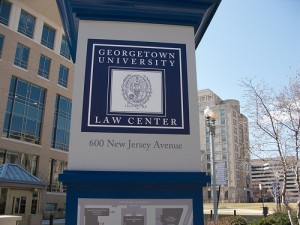
Georgetown University is currently accepting applications for the position of Assistant Dean, Clinical and Practicum Programs. The Assistant Dean reports to the Associate Dean for Clinical Programs, Practicum Programs, and Public Interest and is responsible for (1) the administrative supervision of the J.D. clinical program, (2) the academic administration of the Law Center?s clinical teaching fellowship program, and (3) the development and administrative supervision of the practicum courses.
Georgetown offers 15 clinical courses to its students. Each clinic has 1-2 clinical teaching fellows who are enrolled in the program for two years.
Qualifications: J.D. degree and 5 years post-J.D. experience; superior writing and organizational skills. Experience in clinical pedagogy, management experience in an academic or legal setting, and experience in professional mentoring or student counseling are a plus. This is an administrative, not a teaching, position.
Duties include: developing and implementing administrative procedures and academic policies governing J.D. students enrolled in the clinics and for the graduate teaching fellowship program; coordinating the clinic enrollment process; monitoring the multiple budgets of the entire clinical program; developing and editing publications describing the clinical and fellowship programs; overseeing and developing content for the clinics? web pages; coordinating the review; coordinating a year-long course on clinical pedagogy for teaching fellows; academic counseling to J.D. students related to clinics.
Georgetown is on the cutting-edge in the development of practicum courses, which combine a substantive seminar class and student field work in a related area. In these courses, all of the students in the class take the same substantive seminar. Each student also is assigned either to a field placement at an external organization or to a project that relates to the seminar topic. During the seminar, students are encouraged to critically reflect on the meaning of their field work experiences and what it means to be a lawyer practicing in this field. Duties include: recruiting faculty members to teach practicum courses; designing training for faculty members teaching practicum courses; evaluating the success of the courses and determining what classes to offer again and what the curricular needs are; providing academic counseling to J.D. students in all areas of the curriculum.
View the full listing here (login required).
[photo credit: Vox Populi blog]
Permalink
January 2, 2013 at 9:05 am
· Filed under Career Resources, Events and Announcements, Legal Education, Public Interest Jobs
By: Steve Grumm
Want insight from nonprofit and government employers about what they look for in cover letters, resumes, and interviews? We’re thrilled to partner with our friends at Equal Justice Works to present two webinars offering tips and best practices on the public-interest summer job hunt.
Attorneys with years of application review experience will highlight do’s and don’ts; explain how and why public interest application materials may substantively differ from law firm materials; and explore the dynamics of personal interactions in interviews and networking situations. While the webinars will focus on the summer public interest job search, the information is applicable to postgraduate positions.
- Webinar Uno: Cover Letters and Resumes on Tuesday, January 15, noon Eastern. Register here. Presenters:
- Paul Chavez, Senior Attorney, Lawyers Committee for Civil Rights on the San Francisco Bay Area
- Steve Grumm, Director of Public Service Initiatives, NALP
- Ashley Matthews, PSJD Fellow, NALP
- Jennifer Thomas, Legal Recruiting Director, Public Defender Service for the District of Columbia
- Webinar Dos: Interviewing and Networking on Tuesday, January 22, noon Eastern. Register here. Presenters:
- Nita Mazumder, Equal Justice Works
- Kate Devlin Joyce, Associate Director of Public Interest Programs, Boston College Law School
- Daniel Goldman – Assistant Capital Defender, Northern Virginia Capital Defender’s Office
We’ll be taking Q&A during the webinars. So while we’ll record and archive them, we encourage you to join us for the live webcasts. Contact me at sgrumm@nalp.org if you have questions.
Permalink
December 21, 2012 at 3:34 pm
· Filed under Public Interest Jobs

The Opportunity Agenda is a communications, research, and advocacy organization dedicated to building the national will to expand opportunity in America. Focused on moving hearts, minds and policy over time, the organization works with social justice groups, leaders, and movements to advance solutions that expand opportunity for everyone.
The Opportunity Agenda is currently seeking applicants for its Robert L. Carter Fellowship. From the PSJD job listing:
The Opportunity Agenda, a project of Tides Center, seeks candidates for the Robert L. Carter fellowship, for a two-year term beginning no later than September of 2013. The Opportunity Agenda is a communications, research, and advocacy organization dedicated to building the national will to expand opportunity in America.
The Fellow will participate in legal research and legal advocacy; work with coalitions on framing and messaging concerns; and collaborate with local and national public interest organizations and policymakers on policy and communications efforts. The Fellow will focus on promoting equal opportunity and protecting human rights in such sectors as economic opportunity and immigration policy. Activities are likely to include conducting research and writing legal and policy briefs; helping to create communications strategies and tools; and engaging in policy advocacy, often in partnership with coalition allies. This work will be done in close collaboration with The Opportunity Agenda’s legal, research, and communications staff, providing opportunities for social science research and media experience, as well as legal work.
We encourage applications from attorneys with 5-10 years of legal experience in relevant fields such as economic security and immigration who are interested in incorporating framing and messaging strategies into their work. Law students graduating in 2013 and judicial law clerks completing their clerkships in 2013 are also eligible. We are particularly interested in candidates with a background in the social sciences, journalism, and/or communications. Candidates must have a strong interest in working with advocates and communities in the field, and a demonstrated commitment to social justice. The Opportunity Agenda is an equal opportunity employer. We value a workplace that is diverse in terms of gender, race, class, geographic origin, sexual orientation, and other differences that enrich our society.
The application deadline is January 31, 2013. For more information, view the full job listing at PSJD.org (log-in required).
Permalink